

Missing teeth change more than how you chew. When back teeth are lost and not replaced, the rest of the teeth gradually shift to take up the slack, and the effects often show up in the front of the smile. One of the most common ways this shifting is exhibited is through teeth flaring, where the upper front teeth spread apart and tip outward. Dentists also call this splaying, and when it follows the loss of back teeth, the underlying problem is known as posterior bite collapse. Below we explain what causes flared teeth, how the change progresses, and how it can be corrected.
What Causes Teeth Flaring?
Flared teeth happen when the front teeth angle outward instead of sitting upright over the jaw, giving the look of protruding teeth that fan forward. Flaring can affect the upper front teeth, the lower front teeth, or both. There are several causes of flared teeth:
- Loss of back teeth. The molars carry most of your biting force. Without them, that force pushes against the front teeth, which were never designed to take it, and they fan forward and outward. This is the focus of this page.
- Gum disease. Periodontal disease destroys the bone and ligament that anchor teeth, so they lose support and can drift, loosen and spread. As periodontists, this is one of the most frequent causes of flaring we see in adults.
- Habits. Tongue thrust, thumb sucking and nail biting can push teeth forward over time.
- Crowding. When there is not enough room in the jaw, teeth can be pushed forward.
- Not wearing a retainer after braces. Teeth that were moved with orthodontic treatment can shift back if they are not held in place.
How Missing Back Teeth Lead To Flared Front Teeth
The diagrams below show how the loss of lower molars can progress to overeruption, splaying of teeth and, eventually, gum problems.
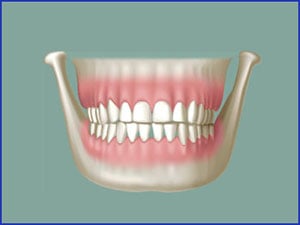
Full Dentition
Full dentition (all teeth in contact). The upper and lower teeth meet evenly, and the back teeth absorb most of the biting force.
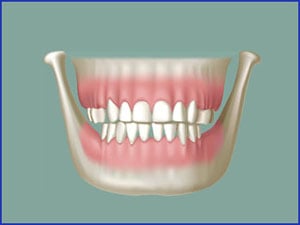
Loss Of Bottom Molars
Loss of bottom molars causes loss of posterior support. The bite now has nothing to stop it at the back of the mouth.
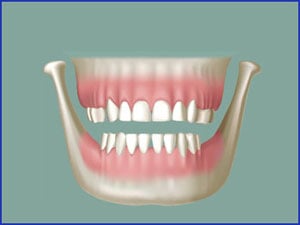
Overeruption
Over eruption of back teeth into empty spaces. The upper teeth with nothing to bite against continue to erupt, as we explain on our page about over-eruption from missing teeth.
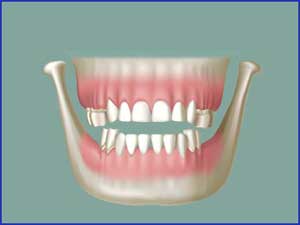
View With Jaw Open
Over eruption of back teeth into empty spaces (jaw open).
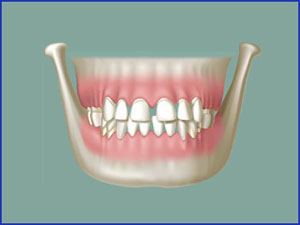
All Biting Force Is Transferred To Front Teeth
This can cause spreading of the front top teeth. With every bite, the lower front teeth push against the upper front teeth and gradually move them forward.
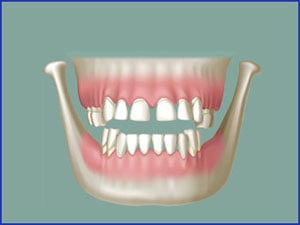
View With Jaw Open
View of front teeth spreading (jaw open). Gaps begin to open between the upper front teeth.
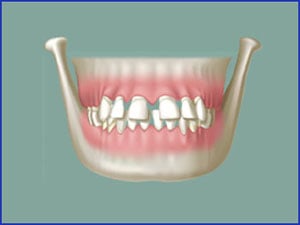
On Top Of Splayed Teeth – Gum Problems Results
Over time, the overeruption and splaying can reach severe levels and cause gum problems. Teeth that have moved out of position are harder to clean, and the extra load on them can speed up bone loss.
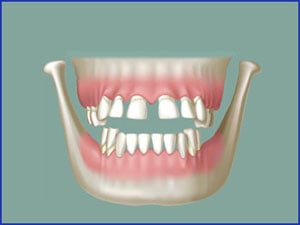
Severe Splaying (Jaw Open)
Severe levels of overeruption and splaying (jaw open).
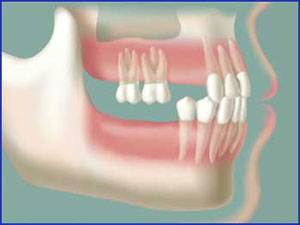
Side View Of Partially Edentulous Jaw
The existing teeth with no opposing forces continue to erupt.
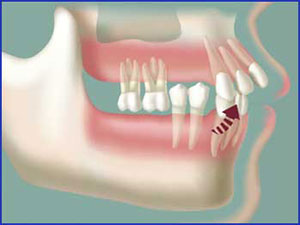
Displaced Force Causes Splaying
When all the force is placed on the front teeth, they can be forced forward and outward.
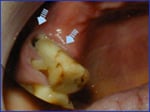
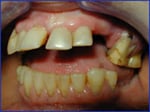
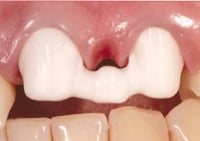
Case Study Images Of Overeruption And Splaying Due To Tooth Loss
Other Cosmetic Changes After Tooth Loss
Flaring is not the only visible change. Missing teeth can also lead to:
- Gaps and dark spaces between the front teeth as they spread.
- Tilted and shifted teeth around the gap, described on our page about tooth drifting.
- Receding gums and uneven gumlines as bone and gum support is lost.
- A shorter lower face and sunken cheeks as the bite collapses and the jawbone shrinks, covered in our page on facial atrophy from missing teeth.
How To Fix Flared Teeth Caused By Tooth Loss
When flaring comes from missing back teeth, fixing the front teeth alone is not enough. The treatment plan usually has to do two things: restore support at the back of the mouth, and move the front teeth back into position.
- Replace the missing back teeth. Dental implants or an implant-supported bridge restore the posterior support that stops the front teeth from taking the full biting force. Where most or all teeth are missing, full-arch options such as All-on-4™ may be recommended.
- Treat any gum disease. Teeth need healthy gums and bone before they can be moved or restored predictably. Our periodontists offer gum disease treatment, including laser options.
- Reposition the front teeth. An orthodontist can correct flared teeth with traditional braces, clear braces or clear aligners such as Invisalign, gradually moving the teeth back into line. Mild to moderate flaring often responds well, while severe cases can take longer or need a combined approach.
- Hold the result. Wearing a retainer after orthodontic treatment keeps your teeth in place. Replacing the missing back teeth is what stops the flaring from coming back.
The order of treatment depends on the severity of the problem and on how much bone remains, so a full evaluation comes first.
Do Braces Fix Flared Teeth On Their Own?
Orthodontic treatment is highly effective at moving teeth. Traditional metal braces use brackets and wires to gradually shift the teeth, while clear aligners use a series of trays, and an orthodontist will recommend the option that suits your bite. For flared teeth caused by crowding, habits or relapse after braces, orthodontics alone is often the answer.
Flared teeth caused by tooth loss are different. If the back teeth are still missing, the upper and lower teeth still meet only at the front, and the same forces that caused the problem will push the corrected teeth forward again. That is why orthodontic treatment for flared teeth should be planned together with replacement of the missing teeth, so the front teeth stay in place once they have been moved back.
Frequently Asked Questions
What Is It Called When Teeth Flare Out?
Dentists call it flaring, splaying or protrusion of the teeth. When it results from missing back teeth, the underlying problem is called posterior bite collapse.
Can Braces Or Invisalign Fix Teeth Flaring?
Braces and clear aligners can often correct flared teeth by moving them back into position. If the flaring was caused by missing back teeth, those teeth also need to be replaced, or the front teeth are likely to flare again.
Can Flared Teeth Come Back After Treatment?
Yes, if the cause is not addressed. Wearing a retainer, treating gum disease and restoring missing back teeth all help prevent teeth from shifting back.
How Can I Prevent Teeth From Flaring After Tooth Loss?
Replace missing back teeth promptly, keep up with periodontal checkups, and ask about socket and bone preservation if a tooth needs to be removed.
Schedule Your Free Dental Implants Consultation Today
Our board-certified periodontists invite you to schedule your dental implants consultation. As leading dental implant providers, they have helped numerous patients missing one, several or even all of their teeth achieve a beautiful smile without traditional dentures or bridges, and they also treat the gum disease that often contributes to flared teeth. Call (347) 493-2439 or request your consultation online.