
What “Fixed” Means
A fixed restoration is attached permanently and does not come out. You clean it in your mouth. You cannot take it out, and neither can you lose it.
A removable restoration comes out. You take it out to clean it, and usually overnight so the gum tissue underneath can rest.
That is the whole distinction. It sounds obvious written down, but it causes real confusion in practice, because a lot of the words used around tooth replacement do not make it clear which kind you are being offered.
(Teeth in an Hour)
Fixed Bridge and Fixed Partial Denture Are the Same Thing
This one catches people out constantly, so it is worth stating plainly.
In clinical terminology, a bridge is called a fixed partial denture. The word “denture” in that phrase means an artificial replacement for teeth, not the removable appliance most people picture. So a fixed partial denture does not come out. It is a bridge.
If a treatment plan uses that phrase, you are being offered a bridge, not a denture in the everyday sense. Similarly, “fixed prosthesis” and “fixed prosthodontics” simply mean permanently attached tooth replacement.
What Counts as Fixed
- A tooth-supported bridge. Anchored to crowns on the natural teeth either side of a gap. Covered on our pages for a single missing tooth and several missing teeth.
- A Maryland or bonded bridge. Held by wings bonded to the backs of the neighbouring teeth.
- A cantilever bride. Anchored on one side of the gap only.
- A single implant crown. One implant, one replacement tooth.
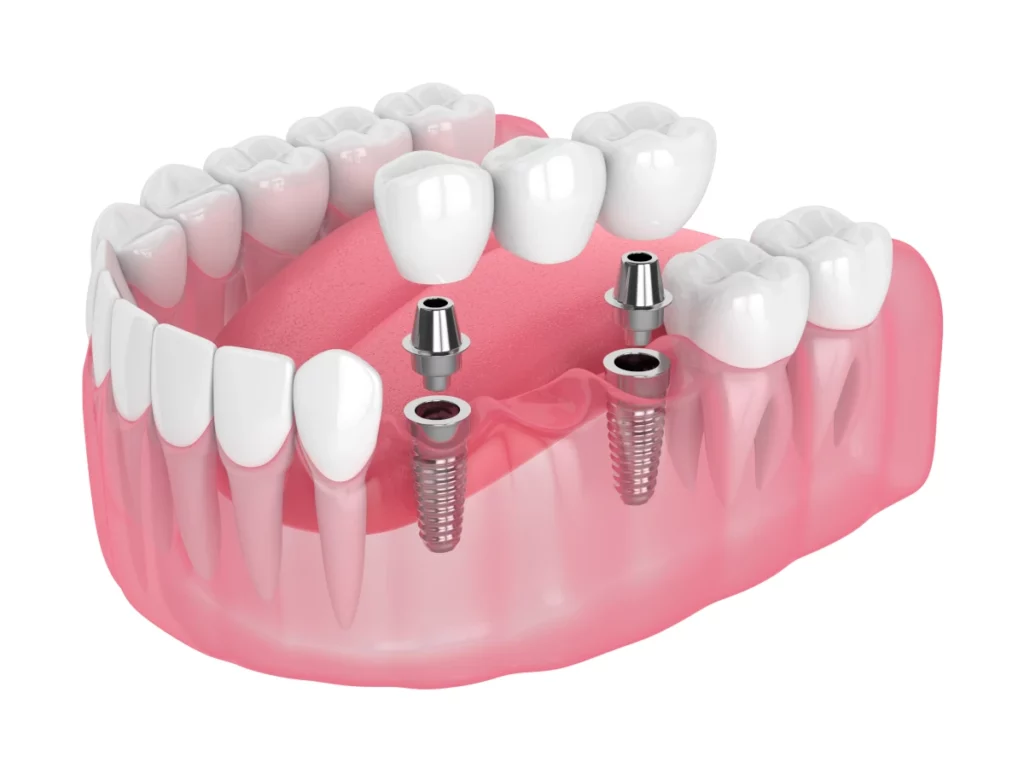
- An implant-supported bridge. Several teeth in a row, anchored to implants rather than natural teeth.
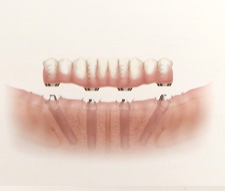
- A full-arch implant bridge. A whole jaw restored on four to six implants, including All-on-4 dental implants.
What Counts as Removable
- A full denture. Rests on the gum, held by suction and adhesive.
- A partial denture. Clips onto the remaining natural teeth.
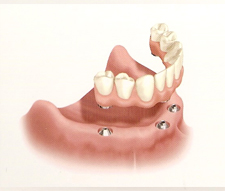
- An overdenture. Snaps onto implants and is far more stable than a conventional denture, but still comes out. This is the middle ground, and it is where most of the confusion sits, because an overdenture is implant-supported without being fixed.
Fixed and Removable Compared
| Fixed | Removable | |
|---|---|---|
| Comes out | No | Yes, daily |
| Chewing force | Close to natural teeth | Reduced, more so with a full denture |
| Bone underneath | Preserved where implants are placed | Continues to resorb |
| Cleaning | In the mouth, with threaders or a water flosser | Taken out and cleaned separately |
| Adhesive | Never | Often needed for full dentures |
| Upfront cost | Higher | Lower |
| Adjustments over time | Occasional | Relines as the ridge shrinks |
| Feels like your own teeth | Usually yes | Usually not |
How the Choice Gets Made
Most patients want fixed. The question is what stands in the way, and it is usually one of four things.
Bone. Implants need bone to anchor into. If the ridge has resorbed after years without teeth, there may not be enough at the sites where implants would need to go. That is often solvable with grafting, or by anchoring into bone elsewhere using tilted, zygomatic or pterygoid techniques, which is a large part of why patients told elsewhere that they need dentures come to us for a second opinion.
Cost. Fixed costs more upfront. It also lasts differently, so the comparison over ten or twenty years is not the same as the comparison on the day.
Health and healing. Some patients are not good surgical candidates. That is a real constraint rather than an excuse, and a well-made removable option is a legitimate answer.
Which teeth are missing. For a single tooth, fixed is almost always straightforward. For a full arch, the decision is much more consequential and worth taking time over.
Can You Change Your Mind Later?
Generally yes, and the direction matters.
Moving from removable to fixed is common. Patients who have worn dentures for years, are tired of adhesive, and want something that stays in are one of the groups we see most. Bone loss from years of denture wear can complicate it, but rarely rules it out.
Moving from fixed to removable is much less common and usually only happens if something fails. Worth knowing: a bridge that relies on crowned abutment teeth cannot simply be undone, because the enamel removed to fit those crowns does not come back.
What Affects the Cost
- Fixed or removable. The largest single factor.
- How many teeth. One tooth, a section, or a full arch.
- Whether implants are involved. Surgical placement and healing time add cost that a tooth-supported bridge does not carry.
- Whether grafting is needed first. Rebuilding bone before implants can be placed adds a stage.
- Material. Zirconia, porcelain-fused-to-metal and acrylic differ in cost and longevity.
- Insurance. Coverage varies widely, particularly for implant work.
I’ll give you an exact cost as part of your treatment plan at your consultation.
Frequently Asked Questions
Is a fixed bridge the same as a fixed partial denture? Yes. Fixed partial denture is the clinical term for a bridge. The word “denture” there means artificial teeth, not the removable appliance. It does not come out.
Are permanent dentures actually permanent? It depends what is being described. A fixed full-arch implant bridge stays in and is permanent in the everyday sense. An overdenture that snaps onto implants is often marketed as permanent, but it comes out daily. Worth asking directly which one you are being offered.
Can dentures be made fixed? Not converted directly, but the same patient can usually move to a fixed option. That typically means implants placed to support a fixed bridge rather than adapting the existing denture.
Is fixed always better than removable? For most patients, fixed is closer to natural teeth in function and feel and protects bone where implants are placed. But a well-made removable option beats a poorly planned fixed one, and for some patients removable is the right clinical answer.
Does a fixed bridge stop bone loss? Only where implants are placed. An implant replaces the tooth root and keeps the surrounding bone stimulated. A tooth-supported bridge sits above the gum and does nothing for the bone beneath the gap.
How long do fixed teeth last compared to removable? Implants themselves are designed to be permanent once integrated, with the restoration on top being the part more likely to need attention. Removable dentures need relining as the ridge shrinks and replacing periodically.
Talk Through Which One Suits You
If you are weighing fixed against removable, or have been told that fixed is not possible for you, come in for an evaluation. We take a 3D scan, look at what bone you actually have, and tell you honestly what is achievable.
Call our office at (347) 493-2439 or schedule your consultation online.