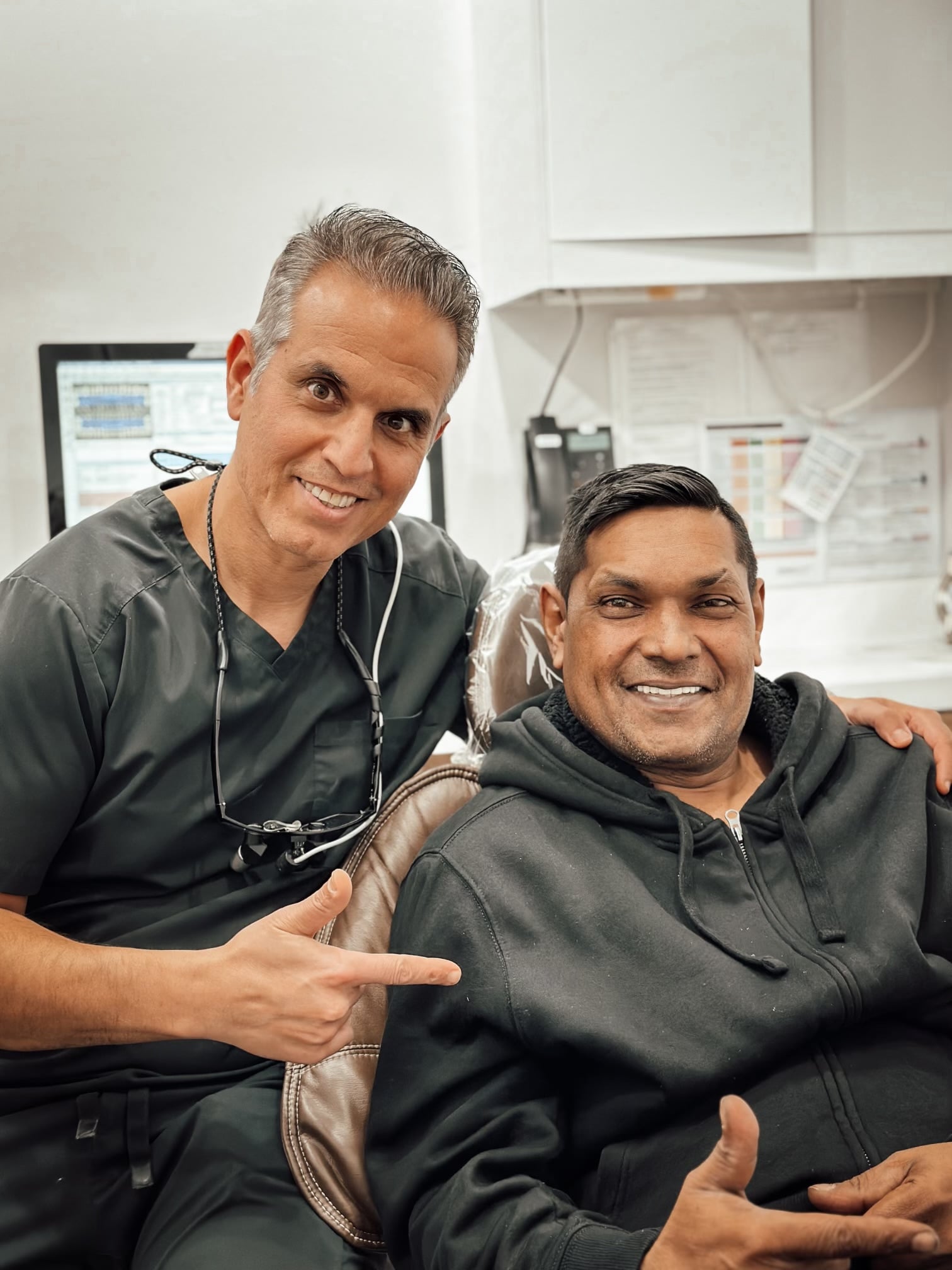

Losing a tooth can affect more than your smile. It can impact your bite, your bone structure, and the health of your remaining teeth. Fortunately, there are several ways to restore a single missing tooth, and I’ll walk you through each one so you can make the choice that fits your priorities.

Why Replace a Missing Tooth?
A missing tooth can lead to a number of downstream problems if left unaddressed:
- Shifting of surrounding teeth
- Bone loss in the jaw
- Difficulty chewing and speaking
- Increased risk of decay and gum disease
- Changes in facial structure and appearance
You can maintain oral health and prevent long-term complications by choosing the right tooth replacement option.
Comparing Your Options
| Removable Partial Denture | Tooth-Supported Bridge | Implant-Supported Crown | Same-Day Teeth | |
| Cost | Lowest | Moderate | Higher upfront | Comparable to an implant |
| Treatment Time | Fastest, days to weeks | 2 to 5 weeks | 3 to 9 months | Single appointment |
| Life Expectancy | Shortest, requires ongoing adjustment | 5 to 15 years | 10 to 30 years | Same as a standard implant long-term |
| Drilling on Adjacent Teeth | No | Yes | No | No |
| Preserves Bone | No | No | Yes | Yes |
| Decay Risk | Not applicable to the prosthetic itself | Yes, at the margins | No | No |

Removable Partial Denture
A removable partial denture is a non-invasive, affordable way to replace a missing tooth. It uses a prosthetic tooth attached to a clasp or framework that hooks onto the adjacent teeth. It’s quick to fabricate and doesn’t require surgery, but it’s less stable than a fixed option, can affect speech, and doesn’t stop bone loss in the area where the tooth is missing.

Tooth-Supported Bridge
A traditional bridge anchors a replacement tooth to the natural teeth on either side of the gap. It restores appearance and function faster than an implant and doesn’t require surgery, but the adjacent teeth need to be reshaped to support it, which increases their long-term risk of decay and doesn’t preserve the bone in the missing tooth’s original location.
Implant-Supported Crown
A dental implant replaces the missing tooth root with a titanium post, topped with a custom-designed crown. It’s the most natural-looking and functioning option, preserves the jawbone, and doesn’t affect the adjacent teeth at all. The tradeoffs are a higher upfront cost and a longer timeline, since the implant needs time to integrate with the bone before the final crown is placed.
Smile in a Day / Teeth in an Hour (Same-Day Teeth)
For appropriate candidates, an implant and a temporary crown can be placed in a single appointment using guided surgical planning. This preserves bone and gum tissue immediately and avoids the wait between appointments that a standard implant requires, though not every patient is a candidate, and it depends on having sufficient bone volume and healthy surrounding tissue.

Which Option Is Best for You?
There’s no single right answer here. Cost, treatment time, long-term durability, and impact on your other teeth all factor into the decision, and the right choice depends on your priorities and your specific case. I’ll walk you through how each option applies to you at your consultation.
Schedule Your Consultation
If you’re missing a tooth and want to explore your options, call our office at (347) 493-2439 or schedule your consultation online. We see patients at our Grand Central, Bronxville, Long Island, and Nutley, NJ locations.