

If your dentist has told you that you need a deep cleaning rather than a regular one, you probably left with two questions. What is the difference, and do I really need it?
Both are fair. Scaling and root planing is the standard first treatment for gum disease; it works well, and it is also one of the most over-recommended procedures in dentistry. So this page covers when it is necessary, when it is not, and how to tell which applies to you.
What Is Dental Scaling?
Dental scaling is the removal of plaque and tartar (calculus) from the teeth using ultrasonic and hand instruments. Every routine cleaning includes some scaling above the gum line, which is why in the UK, India and much of Asia a regular cleaning is simply called “a scaling.” Once tartar hardens it bonds to the tooth, and no toothbrush will remove it.
When tartar and bacteria have moved below the gum line into periodontal pockets, scaling has to reach further, and it is paired with root planing. That deeper treatment is scaling and root planing, and it is what the rest of this page covers.
What Scaling And Root Planing Is
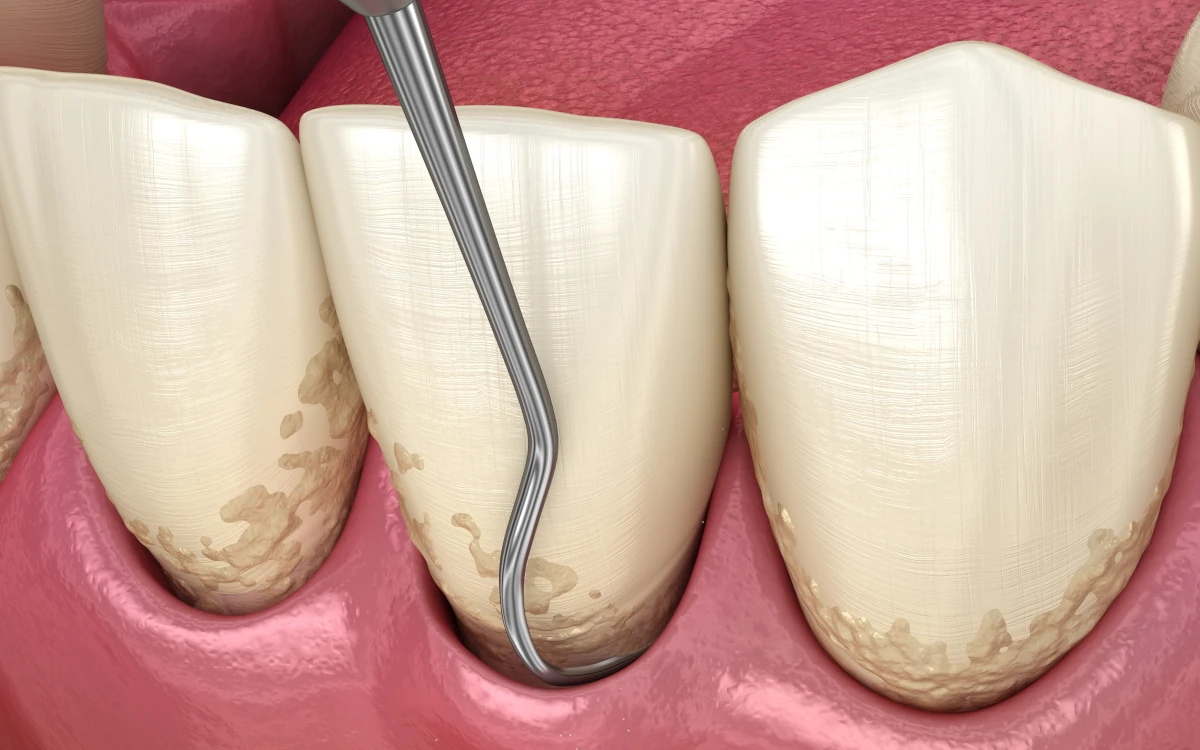
Scaling and root planing, often shortened to SRP, is a deep dental cleaning that reaches below the gum line. Put simply, root planing is a deep cleaning of the tooth root itself, rather than a cleaning of the surfaces you can see.
Two things happen. Scaling removes plaque and tartar from the tooth surface and from the periodontal pockets between the tooth and gum, where plaque bacteria cause the damage. Root planing smooths the root surfaces beneath the gum so bacteria have less to cling to and the gum tissue can reattach against it. Scaling and planing are done in the same appointment, which is why your gums and teeth are treated together rather than separately. You will also see it written as scaling and root planing, or shortened to “deep dental cleaning.”
A regular dental cleaning works on the surfaces above and around the gum line. A deep cleaning procedure goes underneath the gum line, where a brush cannot reach and where the bacteria causing the damage actually live. Left untreated, that is what leads to bone and tooth loss.
Deep Cleaning Vs Regular Cleaning
This is the distinction that catches people out, usually at the front desk.
| Regular cleaning | Deep cleaning (SRP) | |
|---|---|---|
| What it treats | Healthy gums, prevention | Diagnosed gum disease |
| How deep | At and just below the gum line | Into the periodontal pockets |
| Anesthetic | No | Usually local anesthetic |
| Visits | One | Often two, half the mouth each |
| Insurance code | Preventive | Therapeutic, billed per quadrant |
| Afterwards | Back in six months | Periodontal maintenance every three to four months |
That last row is the one nobody mentions, and it matters more than the procedure itself. More on it below.
When Is It Actually Necessary?
Your dentist measures the depth of the pocket around each tooth in millimeters. That is what the numbers being called out during your appointment are.
- 1 to 3mm with no bleeding — healthy. A regular cleaning is appropriate. SRP is not.
- 4mm and above, with bleeding and tartar below the gum line — this is where scaling and root planing is genuinely indicated.
- 5 to 6mm and beyond — SRP is still the right first step, but it may not be enough on its own, and we will tell you that upfront rather than after.
Radiographs matter as much as the numbers. Pockets without bone loss can be due to gingivitis, an inflammation that responds to good oral hygiene at home. Pockets with bone loss visible on an X-ray are signs of periodontitis and need treatment; treating them protects both your gum health and your overall health.
If you have been quoted a full-mouth deep cleaning and your numbers were mostly 3s, ask why. That is a reasonable question, not a rude one, and any dental professional should be able to answer it by showing you the chart and the X-rays. A second opinion costs you an appointment. We give them regularly, and sometimes the answer is that a regular cleaning is all you need.
What Happens During The Procedure
- Numbing. A local anesthetic is used, so the procedure itself is comfortable. This is the main reason it is usually split across two visits.
- Ultrasonic scaling. An ultrasonic instrument breaks up and flushes out tartar below the gum line.
- Hand instruments. Finer hand instruments finish the root surfaces, removing what the ultrasonic left and smoothing the tooth root.
- Irrigation. The pockets are flushed to remove debris, reduce the bacterial load, and help prevent infection while the tissue heals.
- Re-evaluation. We measure again four to six weeks later, once the tissue has healed, to see how the pockets have responded.
Most appointments run 45 to 90 minutes per half of the mouth. A hygienist may perform the cleaning itself in many practices, while the periodontist assesses and plans.
Does It Work?
For most patients, yes. Pocket depths reduce, bleeding stops, and the disease is arrested. It is the most evidence-based non-surgical treatment for gum disease, and scaling and root planing may be all that advanced gum disease needs before it becomes surgical.
What it will not do is regenerate what has already been lost. Bone that has gone does not come back through cleaning, and the gum does not return to where it sat before the disease started.
Deeper pockets respond less reliably. Past about 6mm, instruments struggle to reach the base of the pocket and around the roots of molars, and a meaningful proportion of those sites stay active after treatment. That is the point at which we would discuss LANAP laser therapy or surgical access rather than repeating a treatment that has already been given a fair attempt.
Do Gums Grow Back After Scaling And Root Planing?
The gums reattach to the smoothed root surface, but they do not grow back to their original position, and some patients find that gum recession looks worse afterward. Both facts need to be explained together because the second one alarms people.
Inflamed gum tissue is swollen. That swelling hides recession that has already happened. When the inflammation resolves, the tissue tightens against the tooth, and what was already lost becomes visible. Teeth can look longer, and gaps can appear between them.
The gum did not recede because of the cleaning. It receded because of the disease, and the treatment prevented it from progressing. Some sensitivity to cold for a few weeks is normal for the same reason. If the appearance bothers you afterward, gum grafting can address it, but the recession was not caused by the procedure.
What Happens Afterward
Periodontal maintenance, not regular cleanings. Once you have been treated for gum disease, the standard interval is every three to four months rather than every six. The bacteria repopulate the pockets on roughly a three-month cycle, and maintenance visits are timed to interrupt that. Patients who return to six-monthly cleanings often see the pockets return.
Home care actually decides the outcome. Brush your teeth and gums twice daily, clean between them every day, and stop smoking if you smoke. Professional cleaning resets things; what happens next is mostly determined between appointments, and consistent dental care is what will prevent gum disease from returning.
Expect some tenderness for a few days, and mild teeth sensitivity for a few weeks as the gumline settles. We may prescribe a rinse for a short period. Most people go back to normal eating the same day.
What Affects The Cost
Scaling and root planing is billed per quadrant, which is why a full-mouth treatment costs roughly four times as much as a single area. What drives the total:
- How many quadrants need treating
- How severe the disease is and how much tartar is present below the gum line
- Whether local anesthetic or sedation is used
- Whether antibiotic therapy is placed in the pockets
- The periodontal maintenance visits afterward, which are ongoing
Dental insurance usually covers this as a therapeutic procedure rather than a preventive one, often at a different percentage than your regular cleaning, and most plans require documented pocket depths and radiographs for approval. We will review your plan and explain what it covers before you commit.
We’ll give you an exact cost during your consultation as part of your treatment plan.
Frequently Asked Questions
Is Dental Scaling the Same as a Regular Cleaning?
Partly. A regular cleaning includes scaling above and just below the gum line. Scaling and root planing goes into the periodontal pockets and smooths the roots, usually under local anesthetic. Which one you need depends on your pocket depths and X-rays, not on what the appointment is called.
Is Teeth Scaling Good or Bad for Your Teeth?
Good. Done properly, scaling removes tartar without weakening the teeth. Sensitivity for a few days is common, and teeth can look longer or show small gaps afterward. That happens because swelling was hiding recession the disease had already caused, as explained above, not because the scaling caused damage.
Is scaling and root planing painful? Not during the procedure, since the area is numbed. Afterward, most patients describe tenderness rather than pain for a few days, which is managed with over-the-counter pain relief.
How long does scaling and root planing take? Around 45 to 90 minutes per half of the mouth, usually across two appointments.
Is scaling and root planing ever unnecessary? Yes, and it is worth saying plainly. If your pockets are 3mm or less with no bleeding and no bone loss on X-ray, a regular cleaning is the appropriate treatment. Ask to see the chart and the radiographs. Anyone recommending it should be able to show you why.
How often will I need it? It is not meant to be repeated indefinitely. Once treated, you move to periodontal maintenance every three to four months. If pockets are still deep at the re-evaluation, the next step is usually laser or surgical treatment rather than another round of the same cleaning.
Can I just brush better instead? Not once tartar has formed below the gum line. Tartar is hardened and bonded to the tooth root, and no toothbrush removes it. Good oral hygiene will prevent periodontal disease and maintain the results, but it cannot undo what has already formed.
Does it improve anything besides my dental health? Possibly. Gum disease is associated with several conditions elsewhere in the body, and treating it is generally good for your oral health for its own sake. We would not promise more than that.
What is the difference between scaling and root planing? Scaling removes deposits from the tooth surface. Root planing smooths the root underneath. They are two parts of the same appointment, which is why the procedure is named after both.
Do I need antibiotics? Usually not. Systemic antibiotics are not routinely indicated for gum disease, though a local antimicrobial agent is sometimes placed in a deep pocket.
Schedule a Consultation
If you have been told you need a deep cleaning and want to know whether it is the right treatment, or you have had one and the pockets have not improved, we are happy to look. We will measure, show you the radiographs, and tell you honestly what your gums need, including when the answer is less than what you have been quoted.
Call our office at (347) 493-2439 or schedule your consultation online.